Posts Tagged ‘Wine-Flair’
Real quick:
1. There’s a new Search tab up top to help you find content. Use it – please!
2. Content on this front page will move to an archive folder after a week or two. Scroll down the right sidebar to “Previous posts.”
3. New material in “Fun Stuff” such as Sustainable Winegrowing report and State of the Wine Industry. If you’re really into wine this is for you. And don’t forget our Wine Label charts and Wine and Food pairing chart to help you buy what you want, and enjoy what you buy!
Movies about wine are relatively few, and good ones are as rare as a 1961 Hermitage La Chapelle. Here’s an overview of a couple worth seeing, and some educational ones, too.
Bottle Shock
Bottle Shock, which was independently released in the United States in August of ’08, is out on video. The movie is supposed to tell at least part of the story of “The Judgment of Paris,” that game-changing event in 1976 when a Chardonnay from Napa’s Chateau Montelena and a Cabernet Sauvignon from Stag’s Leap Wine Cellars beat some of the top French wines.
In a blind taste test. In Paris. With some of France’s top wine experts as judges.
Mon Dieu!
Problem is, lots of stuff shown in the movie just isn’t true. Steven Spurrier’s wine shop, the Academy du Vin, wasn’t struggling at all but was a fairly successful business, teaching classes and catering to English and American expatriates living in France. There are a lot of made up characters, too – you know those composite people that Hollywood loves to invent when the real ones aren’t compelling enough. And let’s not forget the gratuitous beauties that pop up: Eliza Dushku as a local tavern owner and Rachel Taylor as a cellar rat/intern and love interest. There’s a lot of unnecessary melodrama which actually detracts from the real story – a classic underdog tale and one that is ultimately satisfying, even if we know all along who’s going to win.
And there’s one huge hole in the movie: Warren Winniarski, the proprietor of Stag’s Leap Wine Cellars, is entirely left out along with his award-winning Cabernet. So is his winemaker at the time, Mike Grgich, one of the first employees of the Robert Mondavi winery and today the proprietor of his own, famous, and award-winning winery.
Oh, rent the movie anyway. The scenery is gorgeous, the American wines actually did win, the indignation of the French was real, and this single event helped launch the modern and very successful American wine business.
You probably know by now that the quintessential wine movie – actually a thinly disguised buddy movi – is 2005′s Sideways. To be sure, there were a few glaring errors in the movie with respect to wine; for example, in a fit of panicked snobbery, Miles stands outside a restaurant and declares that he won’t under any circumstances drink any *&*$#! Merlot, and if anoyone orders any, well, he’ll swoop. And at one winery he whines that he’s not a fan of Cabernet Franc even when it’s well done. Yet later in the movie he raves about one of his prized possessions, a Chateau Cheval Blanc, made with…Cab Franc and Merlot, of course.
Aside from the fact that Sideways is a much better movie in general than Bottle Shock, it’s a much better wine movie, too. You’ve probably seen it, but if you haven’t, go to your nearest Blockbuster right this minute and rent the movie. And without giving anything away, all I can tell you is to look forward to the brief soliloquy of Virginia Madsen’s character, Maya, as she describes in delicate, heartfelt, and almost heartbreaking terms the creation and evolution of a single bottle of wine and all the lives it touches along the way.
Mondovino
Another movie, both fascinating and educational, is 2006′s Mondovino, a documentary that tries pretty hard, maybe too hard, to pull back the curtain and expose the ugly underbelly of the global wine business. Its thesis isn’t too hard to discern: a handful of huge wine and spirit conglomerates is slowly but surely taking control of wineries large and small, around the world. They’re homogenizing winemaking so that we’ll all be drinking the same thing one way or another in just a few years. And we’ll like it, because that’s what we’re being told to like.
A few of the world’s wind notables emerge as clear villains here, among them wine critic Robert Parker. And more particularly, Michel Rolland, “the flying Frenchman” who consults to about 100 wineries worldwide including many in France, the United States and South America. It’s interesting that Rolland denies that he tells his clients to “micro-oxygenate” their wines, but about 12 minutes into the movie he is seen and heard doing precisely that. Director Jonathan Nossiter, an established filmmaker and sommelier, seems to include Robert Mondavi in his gang of bad guys, ironically based on Mondavi’s attempted joint venture in Italy which failed, and his prominence as the leading spokesman for the powerful American wine industry until his death last year.
The movie rambles a bit, a lot actually, and at 165 minutes it’s way too long and lacks, well, editing. The camerawork is really crap, too – I could do better on rollerblades with a camcorder after a magnum of Champagne. And if you think Parker is the man and Rolland, is the other man, then you won’t like what you see and hear.
But if you’re concerned about the direction that the wine world may be taking, slip this in your DVD player and spend a couple hours seeing how sausage, er, wine is made. Curiously, I couldn’t find a trailer for this movie anywhere on the Internet except in French, not even on the filmmaker’s own website where it says “coming soon.”
Educational Movies
Jancis Robinson’s Wine Course
Jancis Robinson’s wine course is a pretty worthwhile investment in time – about five hours – and money, under 20 bucks.
The two-disc set walks you through winemaking techniques and wines made from the so-called “great grapes” including Chardonnay, Cabernet Sauvignon, Sauvignon Blanc, Shiraz, Riesling, and Pinot Noir. Best of all, Jancis takes you to countries where these wines are made, giving you gorgeous views of the vineyards and interesting chats with owners and winemakers. It’s interesting that Jancis is able to translate wine concepts and terms in ordinary language, and yet it you can see how she’s a bit arrogant and condescending when speaking to the vintners themselves.
In any event, though, I don’t think you can find a better introductory video wine course at any price. Naturally it’s available from Amazon.com but you can also find it in the larger bookstores and video outlets that stock cultural and educational videos.
The Secrets of Wine
This course, on the other hand, is a single disc with a scant 60 minute running time. I won’t tell you that you can’t learn anything from this from this course, but unless you know absolutely nothing about wine, you won’t learn very much. I bought it when I didn’t know very much, but based on my previous reading it wasn’t very useful. I’d skip it. By the way, any book or video that promises to reveal “secrets” probably isn’t worth your time or money – after all, if they’re really secrets they won’t be on video, will they?
Get Real Wine Series: Napa and Sonoma Harvest
This 2005 video on a single disc is actually pretty interesting although the production values are lousy and, like Mondovino, it could use some editing and polish. It was produced by a guy named Eric Gerardi from Dayton, Ohio, which piqued my interest since that’s my old stomping ground and there aren’t a whole lot of wine-savvy people in southwestern Ohio.
Gerardi visits and interviewers winemakers from Benzinger Family Vineyards, Steltzner Vineyards and Markham, and speaks with chef and author Cindy Pawlcyn, the owner of Mustard’s Grill in Napa where I’ve eaten a dozen times. Despite the amateurish quality, in about an hour and 15 minutes you get a nice picture of winemaking in Napa and Sonoma – along with a healthy dose of self-promotion by the winemakers.
I don’t think this video sold too well, and as a result it’s a bit hard to find, but it’s certainly worth about the 15 bucks it will cost you.
Who knew? Here in the most densely populated state in the union, we seem to have more “make on premises”, Do-it-Yourself, hands-on winemaking shops than Doan has pills. So if you want to try your hand at making wine, and get a little professional advice and support in the process, New Jersey is the place to be. We’re more than just the turnpike, the highest property taxes in the nation and mandatory full-service gas stations, you know!
Anyway, two of these places I know well – California WineWorks up in Ramsay, and The Vintner’s Circle in both Hackettstown and Whippany, as well as a Pennsylvania location. I’ve visited another, Grape Expectations in Dayton, NJ, and all of them have happy customers. And I’m impressed by the The Wine Room in Manalpan, shown here – they’ve got a huge and impressive barrel room and crush facility. And there are many more, from Cherry Hill to Bound Brook to Freehold to Montague.
Most of these places hold individual or group winemaking classes, and sell winemaking equipment and supplies. Many, though not all, also sell grape juices and juice concentrates, and some even allow you to order whole fruit from Napa and Sonoma among other places, which is then shipped to you for your own personal “crush.” You can often choose the type of barrel to age your wine in, design and print your own labels, and of course bottle the wine when it’s time. You’ll learn a lot along the way and it’s a lot more fun than digging ditches or pulling weeds, if you ask me.
A pretty complete list of DIY winemaking facilities is here.
With Passover now a WEEK away, it’s time to think about GOOD Kosher wine.
Let’s start with a little understanding of what makes a wine Kosher. Grapes are grapes, neither Kosher nor non-Kosher until they arrive at the so-called crushpad where they begin the process of becoming wine. Once that happens, for the wine to be Kosher, the grapes must be handled from that point by Sabbath-observant Jews. So far so good. So, let’s assume that the grapes are crushed, pressed and fermented by this Kosher crew, using only Kosher ingredients and approved processes. For example, wine can be fined with egg whites, which is pretty standard in the industry, but not using Isinglass which is made from Sturgeon bladders and is decidedly not Kosher. The wine is then aged and bottled, again under Rabbinical supervision.
At that point, the wine can simply be distributed, but the hitch is that for the wine to remain Kosher down to and on the Passover table, it can only be opened and poured by a Sabbath-observant Jew. To deal with that, many wineries subject the wine to a heating process (it’s not really boiling, although that’s a popular misconception) called Flash Pasteurization, which renders the wine Mevushal and it then can be handled by anyone. However, wine that’s been heated has been, well, mistreated, at least in my humble view.
My friend and teacher Jeff Morgan has a nice, concise primer on the what makes a wine Kosher and the distinction of Mevushal or non-Mevushal – read it here. And please, avoid Mevushal wines if you can, and try these:
Covenant Cabernet. From Jeff Morgan (full disclosure here) and Leslie Rudd of Rudd Vineyards, this is the best Kosher wine you or I have ever tasted. Not cheap but c’mon, splurge a little for Passover!
Red C Cabernet
Second label California Cabernet from the Covenant people; still not cheap but more affordable at about $45 per, and outstanding in its own right.
Pommery Champagne Brut Royal.
This non-vintage is 35% Chardonnay, 35% Pinot Noir and 30% Pinot Meunier. Rich, yet nicely acidic.
Dalton Sauvignon Blanc Reserve.
Tried to find a non-Mevushal SB from NZ – no luck – but this one from Ha Eretz is pretty nice.
Domaine Lafond Tavel Rhone Rose.
I drink this all the time after, er, Church. It’s medium-bodied, dry rose Kosher wine, non-Mevushal, made from Greanche, Cinsault and Syrah. The ’06 and ’07 are widely available too, I imagine.
Ramon Cardova Rioja.
Tempranillo from old vines – it’s got some nice spice and leather, although it may lack a bit in body. Great bargain, too.
Domaine St. Benoit Chateauneuf du Pape.
Outstanding offering that’s a combination of Grenache, Mourvedre, Syrah – and the only Kosher Chateauneuf du Pape I know of. This is a find.
NOTE: The links to most of these wines takes you to online store headquartered in Skokie, IL. I don’t have any interest in that store (or any store) and I don’t know the people who own it. It’s just that they’ve got a great range of Kosher wine and a lot of information too. If you want one or these wines, you can purchase online, or ask your local retailer.
In case you were inspired by the eight Oscars that Slumdog Millionaire brought home, here are some suggestions for pairing wine with Indian food. And a pairing chart is available here with suggestions for other foods and wines.
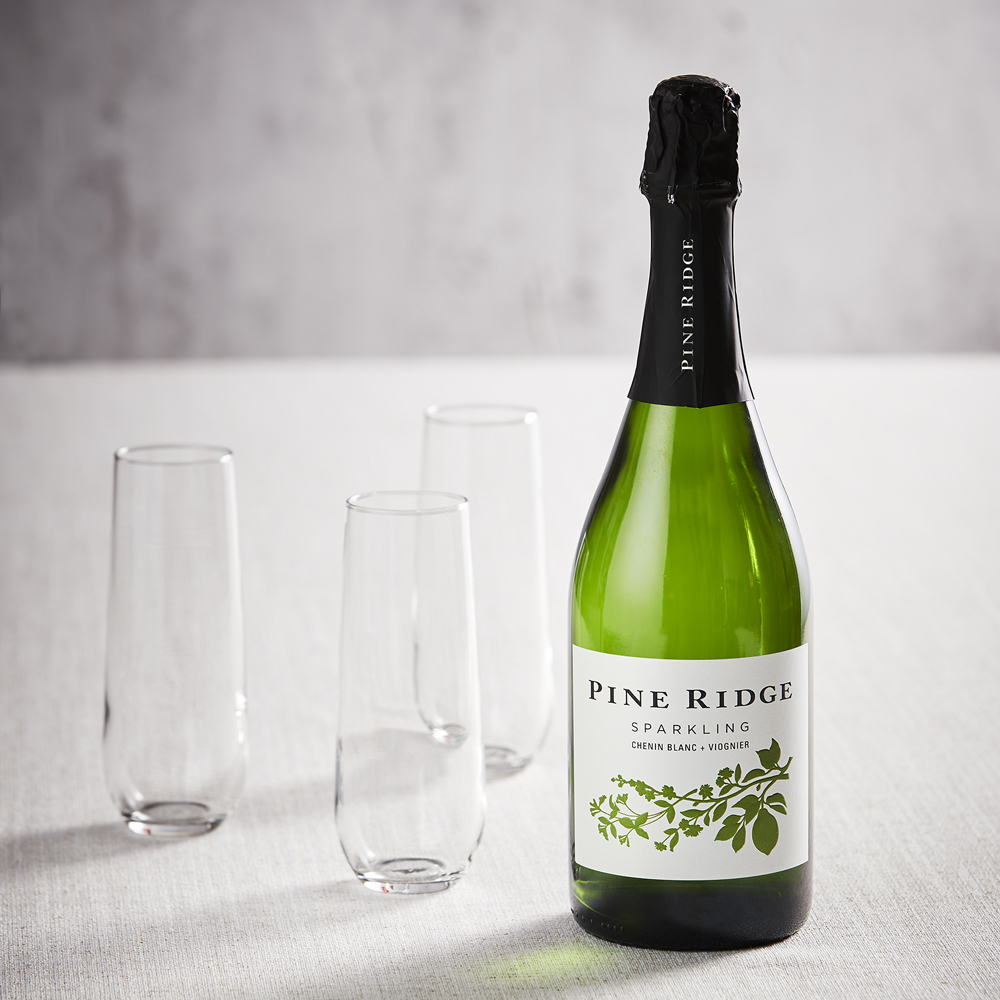
A great wine with Indian food is a mix of Chenin Blanc and Viognier from Pine Ridge…it’s pretty great with all kinds of Asian food too, and you should be able to find it anywhere in the US.
My very favorite Indian pairing is 100% Pinot Blanc – you can try one of many from the Alsace region of France, such as Meyer-Fonne Pinot Blanc Vieilles Vignes, or one of many domestic Pinot Blancs such as WillaKenzie from Oregon. Good stuff that!
One other option is a dry Rose, say, a Cabernet Franc-based rose (such as a Chinon from France). These fully dry Roses will offer a different experience but I think they’re great with lamb dishes and curries. With the chicken dishes I’d stay with a Kabinett-style Riesling or the Chenin Blanc.
And many say beer is the best pairing. It’s good – but wine is better! (Always!)
Have you recently visited an out-of-state winery and wanted a case sent home, only to be told it’s illegal? Confused by wine shipping laws? You’re not alone.
First let me say that I support the right of wine retailers, wholesalers and distributors to exist and make a living. The idea that we could or should just toss aside the three-tier system and buy all our wine, as the Brits might say, via “the post” is neither practical nor fair for all concerned.
Having said that, wineries simply ought to be able to ship directly to consumers, too, with few or no restrictions and with as little administrative burden as possible. For small wineries that cannot command the attention and shelf space of major brands, and that simply cannot afford far-off sales people or promotion, this can make the difference between modest success and, well, insolvency. That’s hardly fair and not smart either. And I think you’d be hard-pressed to make a case that this poses a threat to the distributors and retailers, to be honest. Producers of small lot, truly “hand-crafted” wines add a lot to our enjoyment and for most of them, direct-to-consumer is about they only way they can prevail.
Free the Grapes, a consumer advocacy group that supports unfettered wine shipping among and within all 50 states, has an interactive map that shows what’s what where you live. If you’re interested in buying wine directly from producers and retailers at a distance, take a look and see where things stand.
As you check out the new Wine-Flair.com, please take advantage of the resources on this site. First, click the Fun Stuff tab and take advantage of a wine and food pairing chart; a wine notes sheet for recording your impressions about wines; and tables that list the grape varieties found in a number of red, rose and white European wines.
Two other places to get useful information: The Wine FAQs tab, where you’ll find a glossary of wine terms written in language you can understand, and some Q&A; around the questions we’re asked most. And you might enjoy the periodic columns in Words of Wine, some of which you can download and listen to at your leisure from the Podcasts tab.
AND – Don’t forget to scroll down for the WINE QUIZ and WINE NEWS frequent features.