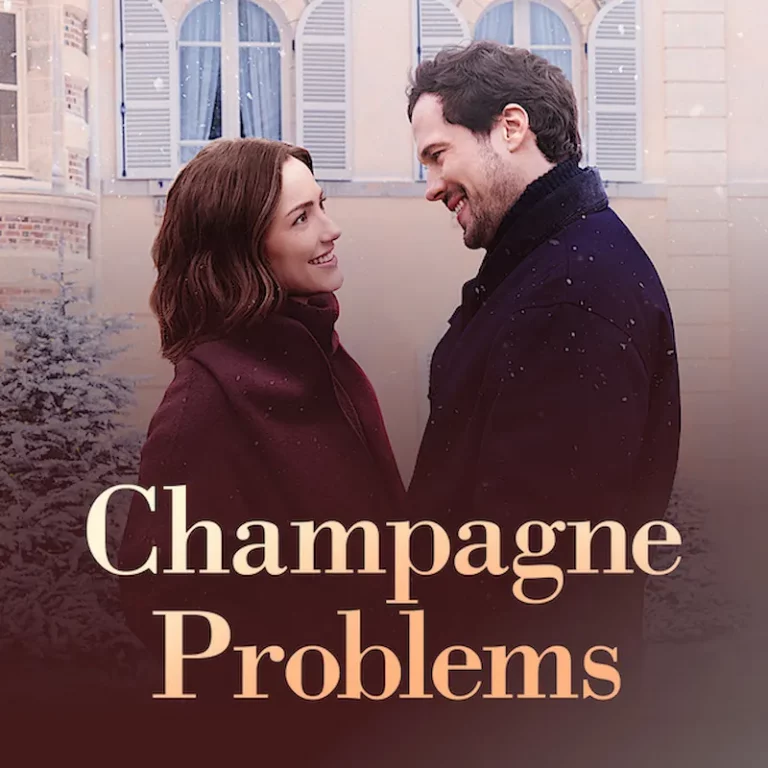
The new 2025 Netflix holiday rom-com “Champagne Problems” is set against the beautiful backdrop of a historic Champagne vineyard and chateau in Epernay, one of the mainstay locales of the industry. The story centers on Château Cassell, a prestigious but financially-struggling house, and its (seemingly) dormant, snow-glazed vineyard is the setting for an affaire de coeur, if predictable tale, as naked corporate ambition morphs into a change of heart that comes to appreciate the importance and value of family, heritage and legacy, and ignites love along the way.
Minka Kelly, an accomplished actor known for her rare combination of beauty and girl-next-door approachability, sets off for France with a mission to acquire the winery on behalf of what amounts to a corporate raider, The Roth Group, confident in her PowerPoint deck presented with obvious charm and persuasion skills. Back in (Chicago?), during a tete-a-tete with her sister about where their very different life journeys have taken them, Kelly’s Sydney Price’s clear grasp of the opportunity to seize a smallish, floundering Champagne house, still seems to trouble her even before her initial flight to Paris. There, on her first and only night in the City of Light, she visits a small bookstore and meets Henri Cassell, a charming local who dreams of opening his own wine bookstore, unaware he’s the son of Cassell’s owner Hugo Cassell. An unlikely competition follows, where Hugo has also invited three other bidders, and subjects them to a series of hilarious if odd “tests,” to divine who’s most likely to preserve the label in his image.
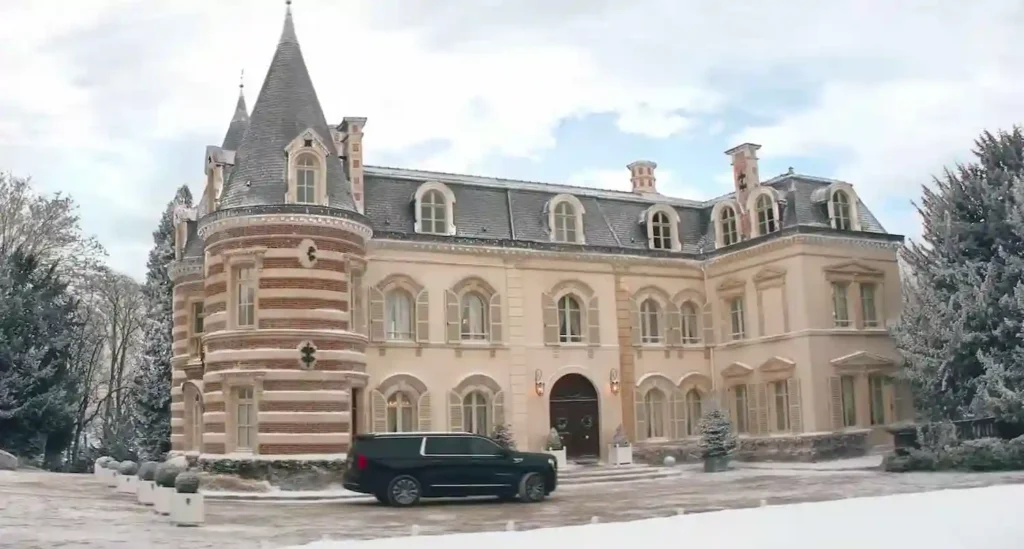
And yet, the Champagne industry’s adversities are real enough, even if the ending of this tale ties a shiny red bow on the chateau’s sweet wine doggy, and the obligatory kiss of the new lovers in the ambience of crisp winter air. I won’t spoil the real surprise, though you might guess it along the way as you watch.
Aside from all the challenges facing the entire alcohol beverage industry, the wine business (and Champagne is just wine, fermented twice) is hurting–Olympic-sized pools of unsold bulk wine; tons of grapes left to rot on vines during the last three harvests (indicating far too many acres under vine); legions of “me-too” unsold, oaky and dense Cabs and Chardonnays at absurd prices; climate change and wildfire catastrophes; and recent, massive tariffs crippling both imports and exports. To say nothing about sea-changes in consumer tastes and preferences, disposable budgets, and social habits, including a move to low- and NA beverages and THC-infused RTDs, as well as competition from hard seltzers and ales.
Champagne, too, has its specific challenges. While there are some bargains to be had from smaller producers, especially “grower Champagnes” labeled RM, “Récoltant-Manipulant,” the so-called grandes marques such as Moët & Chandon, Krug, Dom Pérignon, Veuve Clicquot, Bollinger, and Louis Roederer, while known for the brand prominence, availabililty, and consistency, are trying to hold the line on price. And that’s getting harder when other “Methode Champenois”-style sparking wines at much lower price points gain traction constantly–good Cavas from Spain, Cremants from France; Riesling Sekts from Germany; Franciacortas and Proseccos from Italy; and outstanding sparklers from the UK (!!) and California…and even New Mexico and Michigan.
Still, Champagne maintains a mystique and appeal that will endure, but to be sure, that market is changing and likely shrinking over time. Change is not always good, but it’s always inevitable.
CHEERS.