Archive for June, 2009
I recently wrote a piece about the restaurant bait-and-switch, about which I received more comments – all positive – than any other post on Wine-Flair, ever. So this morning when I was checking out a discussion about restaurant wine service “pet peeves” on Wine 2.0, I realized that the bait-and-switch thing is just the tip of the iceberg, and that diners need to know more to get good service.
Ordering wine in a restaurant, and the rituals of presenting the bottle, opening it, presenting the cork and the first pour give a lot of people angst…and some end up just drinking beer or a cocktail instead. I’ve long said that the wine and restaurant businesses need to do more, a lot more, to make this process more friendly to the consumer if they want to capture a larger share of the market and make Michelob drinkers into Merlot drinkers.
If you have any questions about this sometimes absurdly over-dramatic process – and you probably do – perhaps start by reading this primer on restaurant wine service. Then make a comment or email me your reaction.
Happy dining and whin…er, wining!
On Monday evening at New York City’s Beard House, we were treated to a spectacular “New England Springtime” menu, courtesy of my cousin Mark Gaier, and his partner Clark Frasier, co-owners and nationally acclaimed chefs of Arrows and MC Perkins Cove restaurants, both in Ogunquit, Maine (shown in photo below right). They were accompanied by Arrows’ executive chef Justin Walker, an accomplished chef and an expert in New England fish and farming.
Aside from bragging about Mark, Clark and Justin and the delicious food that they create daily, I want to make a simple point: This fabulous meal was made even more wonderful by pairing each course with a wine that complemented the food, garnishes and method of preparation, and actually accented the many and complex tastes rather than clashed with them. The wine and food pairing, by the way, was done by Danielle Johnson Walker.
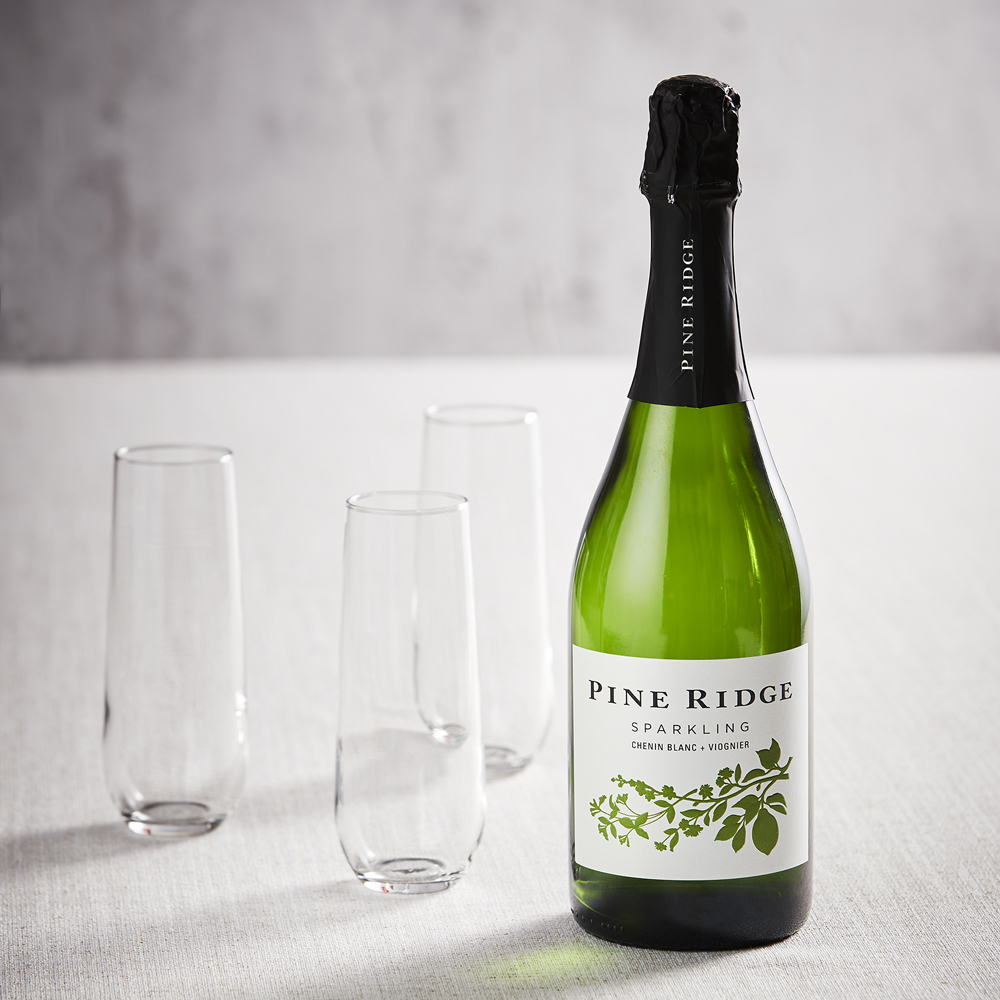
Anyway, on to the food and wine. Our appetizers of miniature lobster Rolls, crab cakes with remoulade, and yam fries (yes, and amazing, with a wonderful dipping sauce) were accompanied by California Sparkling Wine from Domaine Carneros. The wine cut through but didn’t overpower the sauce binding the lobster filling, or the little dollop of sauce atop each crab cake, and its crisp acidity was refreshing on a humid NYC evening. I’ve visited Domaine Carneros several times, toured its bottling line and sat on the terrace behind its massive reprodiuction of a French Chateau. It’s a fun experience, especially with a glass in your hand!
Our first regular course was house-made agnolotti (cheese pasta) with sauteed foie gras, cherries, and Arrows arugula, paired with Crowney Sauvignon Blanc from New Zealand. I found that this wine went great with Fois Gras, even though many wine folks might have stayed with something “traditional” such as Sauternes unless we gave it some more thought and a little innovation. I think it worked well mainly because it wasn’t a typical NZ grapefruit bomb, which would have been over the top for such delicate food, but a bit mellower in the Graves style. And the sweet wines might have worked for the foie gras but not for the cherries – which were flavorful but not sugary – or the arugula.
The second course, Arrows Charcuterie, included vintage 2007 prosciutto, quail sausage, house-made beef jerky (yum!), pepperoni, and miniature smoked garlic sausage, served with Justin’s mustard and Arrows greens. The wine pairing was MAN Vintners Chenin Blanc from South Africa, where a quarter of all the vines are of this variety. This was an inspired if a bit counter-intuitive choice, given that you might naturally reach for a rustic red wine here. But these very rich meats, with their smoky, garlicky and spicy flavors could have gotten lost with a tannic, rough red. On the other hand, they were complimented nicely with this Chenin, which had the richness to stand up to the meats and yet was elegant.
The third course, Pan-Fried Halibut with Xiao Xing Wine (don’t ask, and I don’t know), Chinese Black Beans, and Summer Winter (Mark and Clark’s third restaurant, in Massachusetts) Herbs, was paired nicely with Heron California Chardonnay. The sauce didn’t try too hard to overpower the firm, delicious fish, and this somewhat crisp, Chablis-like Chard didn’t smother it, either. The grapes for this unpretentious and very affordable wine come variously from the Russian River Valley, Carneros and the Santa Maria Valley regions.
Our absolutely amazing fourth course, smoked eye of rib-eye with herb butter, was the single most delicious piece of meat I’ve ever tasted – kudos Justin, up all night smoking them. Along with Mark’s Mom’s (my aunt Delores) Corn Custard, carrots, lovage (I had to look it up so you can, too), and farmers’ cheese salad, the steak was paired with a Chateau de Caix Les Terrasses Malbec. If you’re thinking Argentina but this doesn’t sound Spanish, that’s because it’s a French Malbec from Cahors. Known in other areas of France as Cot and also in Cahors as Auxerrois, Malbec is one of the grapes that go into classic Bordeaux. By itself it’s not as complex and perfumed as many other reds, but it was excellent for this tender piece of beef that was drizzled in a savory meat stock sauce with just a hint of black peppercorn at the end. Being somewhat soft and fruity, but not flabby (lacking in acid) the Malbec didn’t overpower the corn custard, either.
Finally, I hope you’ll take away three things here:
#1: Wine and food pairing isn’t a science, it’s an art, but there is some “flavor science” behind it. Really. It ain’t just hooey.
#2: It’s worth your while, especially in a restaurant or when preparing a dinner party, to think about how to pair your food choices with wine(s) that work to bridge that space between both. There are some fun online tools to help you, lots of books that you can read such as What to Drink with What You Eat, and my Wine and Food Pairing Chart is a good place to start.
#3: Arrows and MC Perkins Cove are outstanding restaurants, with the best chefs in the land. Try them if you’re in Maine. And if you’re not, you
should go!
Not long ago I took a 3-day Intermediate Certificate wine class at The International Wine Center in New York. Although I was possibly the most experienced student in the class, I still learned a lot – not so much wine “facts,” but really just having the opportunity to focus on wine without distractions, and getting new and different points of view. And the three days of tasting really was a great refresher for me, not having been in a formal class for awhile. The class was organized by geography, with an hour lecture/presentation followed by an hour of tasting wines from that region. We covered the US, Spain, France, and Italy among others.
For beginners as well as experienced wine students, I recommend the solid but friendly approach of Keith Wallace, founder and President of The Wine School of Philadelphia. Keith knows, as I do, that wine has been made into something mystical and, as wine writers sometimes say, “unapproachable.” He and his team have a way of fusing fun with practical knowledge, and his Foundation Course, one of the best available anywhere, is always sold out. I know…I took it a few years ago, and it’s gotten better and even more popular. The Wine School also offers a full range of intermediate (Certificate of Global Wine Studies) and advanced classes, including The Diploma Oenotrope, an advanced program that requires completing three certificate programs (Foundation, Global, and Advanced) along with a a senior project and a four month internship. All of Keith’s classes include tasting, which is an important part of any rigorous, professional wine course.
In New Jersey, I teach classes, too, and here’s a brochure that details some of them. I’d love to have you in a class soon!
And here’s something you should know about tasting wine in a professional or academic setting: it’s not all fun. That may sound absurd, but I’m here to tell you that you don’t just “taste” – you need to record your specific impressions using an accepted vocabulary, and then explain and justify your evaluation in front of your fellow students. You learn a lot in a tasting class because you’re required to describe what you’re tasting in meaningful terms, rather than just say you liked or didn’t like it. And when you’re tasting, say, 60 wines in an afternoon – or even a morning – you can’t actually drink them, or you’d be horizontal within a half hour. You taste and then spit, which frankly gets kinda gross after awhile.
I’ve also taken three professional wine classes at The Rudd Wine Center of the Culinary Institute of America, in St. Helena, California in the very heart of Napa Valley. Great classes, instructors who make and sell wine for a living (such as Jeff Morgan of SoloRosa and John Buechsenstein of Sauvignon Republic), and there you are surrounded by wineries and vineyards!
So, what I’m saying here is that if you’re really interested in wine, go take a class, or attend a true structured tasting. There you’ll get tasting notes, write down your own impressions, and usually get some good info from the instructor about the vineyards, climate, the country where the grapes come from, the styles of wine from that region, and comparisons with similar wines from other regions, countries or continents.
Another great way to learn about wine is simply from reading. My website, sure, and thanks for visiting – but there are a lot of good books out there. I personally wouldn’t read Wine for Dummies or any of the other “Dummy” series, as I don’t like giving money to people who insult me at the start – at least wait until you know me a little bit. And I’m not a dummy, and neither are you. You’re probably just new to wine, or perhaps you’ve been around the vineyard a bit but just not had the time to focus.
So perhaps start with a half-hour or hour of reading at night before you tune into The Daily Show with John Stewart (which I never miss), or instead of watching the dismal 11:00 pm news programs with stories of market and automobile crashes. There’s a host of good books out there, some of which I mention in “Wine Books.”
Imagine you own a small hardware store in, say, Cincinnati. A good customer who’s also a familiar face walks in and buys some power tools costing a couple hundred dollars.
Great so far, right? You ask “Put this on your tab?” He replies, “No, I’ll pay cash.” Fine; you ring him up, and he plunks down $212…in Monopoly money.
This is a problem, because, well, you’d only accept Monopoly money when you’re playing Monopoly. But you would take U.S. currency because you see it often and it’s obviously familiar. More importantly, you recognize it as valid.
Well, the story is the same for wine reviews, wine rating systems based on points, and the judgments of wine reviewers. For example, to a lot of wine lovers, Robert Parker is very familiar, and they take what he says as currency. As a result, they may never try wines that he doesn’t recommend and they’ll probably also find that their tastes and preferences in wine inevitably start to be a lot like his.
Do you like big, bold, fruity, explosive, “massive?” Hope so. I do, actually, but I also like subtle, gentle, elegant, restrained, nuanced, complex, crisp, and sometimes even off-beat. Now, Parker is the most influential person in the wine world (well, except for Richard Sands of Constellation Wines, according to Decanter), but so what? His palate ain’t yours, his tastes ain’t yours and his budget is just a bit larger, I imagine. Anyway, what’s in a number? Can Parker himself tell me the difference between a 92 (92 being some kind of threshold, I am told) and a 93? And even if he can, do I care?
The other point here is that the very idea of putting a mathematically precise point rating on something as subjective as the taste of wine is itself a little absurd. Now, as somebody who tastes and recommends a lot of wines myself, I’m the first guy to admit that there are some sensible and accepted ways to evaluate wine, and some commonly accepted terms to describe it. But that’s a long way from giving a particular wine a numerical score of, say, 95 and then declaring it’s worth $1000 a bottle as a result.
So, if you’re going to depend solely on Parker or anyone who rates wine numerically to tell you what to buy and what’s good – and what’s lousy – then you’re going to be accepting quite a lot of Monopoly money. If you’re ok with that, fine. Me, I prefer my own palate…after all, it’s the one I taste with.
And I live in Jersey so I can tell you that Atlantic City is no prize.