Logo

Archive for August, 2009

Stepford…Wines?

Most people who drink wine but don’t “follow” it haven’t heard of Michel Rolland and probably won’t be interested in the controversy that occasionally swirls around him. But he’s a symbol of how the world of wine is consolidating, and the degree to which some winemakers are influencing wines to a remarkable degree.

The question is, is this influence good for us consumers? Are a lot of formerly different and interesting wines starting to taste identical – and boring – on account of guys like Michel? Or is this just overstated, overly-dramatic hyperbole by people whose wines aren’t getting the big scores?

For those of us who are immersed in this stuff (get it?), everywhere we turn there’s another article about Rolland putting his personal mark on wines from every continent. Much of the coverage is fawning and borders on idolatry; I guess that’s to be expected in the wine world, where winemakers and winery founders are the equivalent of rock stars.

Who is this guy, anyway? Well, Rolland is 61-year old Frenchman known as “the flying winemaker.” Essentially, he jets around the world dispensing winemaking advice for a hefty fee, even to wineries that have full time and very capable winemaking teams. I’d heard of Mr. Rolland for some time before I became truly interested in his story, after reading “Rolland’s Mark on Virginia,” in the March 2007 issue of Wines & Vines. In that piece, writer Mark McIntyre notes the criticism of Rolland, which in my view is often based on professional jealousy, tinged with latent anti-French sentiment that seems to pervade the US these days, and which I find groundless and absurd. Remember “freedom fries?”

McIntyre also notes that the criticism emerged after Rolland was prominently featured in 2004′s Mondovino, a documentary that seems to suggest that winemakers increasingly focus solely on getting high ratings from the big consumer wine magazines, losing their souls in the process. It also suggests that small, “artisanal” producers are being forced out of the business by big, internal wine conglomerates.

Having said that, McIntyre avoided a genuinely deep look at Rolland in his article, and he’s simply wrong when he says that Rolland is controversial because of Mondovino; that was a documentary, and very few people saw it. It’s not the film but what it suggests that stirred things up: as the wine business “globalizes” like information technology, diversity in winemaking is going out the window.

McIntyre is not alone avoiding tough questions: a June 2006 article is Wine Spectator said “He (Rolland) is not a proponent of micro-oxygenation as some suggest, and never has been.” Yet a scant 10 minutes into Mondovino, we see Rolland holding court at the prestigious Chateau Le Gay in Pomerol, telling (not suggesting) owner Francois Boursaud to do just that. He says he’s doing it just to “make the wine better.” And at that moment, when filmmaker Jonathan Nossiter notes that not everyone shares Rolland’s ideas about what makes a wine better, he responds “Yeah, it’s called diversity. That’s why there are so many bad wines.”

That’s a strong message there: What’s better is what Mr. Rolland says is better. And winemakers had “better” listen.

The Wines & Vines piece was especially telling because, while Kluge Estate Winery owner Patricia Kluge disputed that Rolland makes the same wine everywhere, the article seems not to be about what she, winemaker Charles Gendot, or CEO William Moses want, but what Monsieur Rolland wants: “For the long term, Rolland’s goal at Kluge Estate is to unlock the potential of the Carter Mountain soil.” His goal? Have they none for their property and their wines?

To be sure, Rolland’s insight and expertness are real, and earned. I’d love to have his palate, his knowledge of grape growing and his years of experience. And, well, he’s rich, lives in Bordeaux, and makes a living tasting wines, walking the vineyards, and gently barking “suggestions” to the royalty of the wine world. What’s not to like about all of that? And the issue about micro-oxygenation is just a sideshow…that’s just a technique that many wineries use from time to time.

The real issue is simple and important, and it’s fair to ask: Can anyone who touches 100 wineries and countless wines every year avoid – even if he tries – putting a very personal, singular stamp on what otherwise might be very different wines?

I kinda think diversity in wine is good. You?


Wine Shorts

Prosecco gets a Promotion

The producers of Prosecco – that refreshing Italian sparkling wine made from grapes of the same name – are thrilled that the Italian government has elevated Conegliano-Valdobbiadene to Denominazione di Origine Controllata Garantita status, the country’s highest level of quality. Only 41 wine regions in Italy carry the D.O.C.G. rank.

Prosecco producers may now call their wine “Prosecco di Conegliano-Valdobbiadene” or “Prosecco Superiore” beginning with the 2009 vintage. And as we say in the Marine Corps, everyone moves up one.

Why? Because wineries in nine provinces outside the DOCG region currently producing Prosecco labeled “Indicazione Geografica Tipica” (IGT, two levels down on the prestige meter), have been raised to (DOC) status. That was the rank once formerly held by Conegliano-Valdobbiadene. Finally, winemakers located outside this new DOC area will not be allowed to make a wine and label it “Prosecco.”

What does this really mean? Not so much to you and me, but to the top Prosecco producers it means they got kicked upstairs and are getting the respect they deserve. Prosecco really is a wonderful sparkling wine, lower in alcohol than many others and very refreshing and crisp. It’s also a great value.

What (Grape)’s in a Name? A Place. Somewhere. Probably un-pronounceable.

We Americans tend to describe, discuss and select wines based on the variety(ies) – that is, the grape or grapes that go into them. Hey, I’d like a Cab from Sonoma or a Pinot from Oregon, right?

But that’s bewildering to most people who don’t follow wine closely and don’t exactly have time on their hands to memorize what grape goes with what location. And, well, some of these places are often impossible to pronounce and therefore impossible to remember, anyway.

Say, for example, you like Merlot but want to try one from France or Italy. Except in very rare cases, such as Christian’s Mouiex’s Merlot, it won’t say “Merlot” on the bottle. Or maybe you had an Australian Viognier from Yalumba Winery but want to try one from France.

What to do? At least three things.

First, you can download and save my Wine Grape Charts, that give you the names of the grapes (sometimes there are two, three or even four varieties in a wine) and their corresponding, weird-sounding places. It’s not exhaustive and not meant to be, but it will cover about 90% of the wines you’re likely to find in most retail stores. For example, it will tell you that Viognier wines – some of the best ones, anyway – come from a place in France called Condrieu and that’s what’s on the label.

You can also look on the back label, which is just what it says…a second label on the back of the wine bottle, that sometimes (but not always) lists the grape varieties in the wine, and sometimes even their proportions.

At left is a remarkably detailed one, showing that this wine contains 66% Cabernet Sauvignon, 13.5% Malbec, 10.5% Merlot, 5.5% Cab Franc and 4.5% Petit Verdot, the five classic grapes that go into a Bordeaux blend (despite the fact that this is Australian wine). They even tell you a bit about how the grapes were harvested and the wine was fermented. But to tell the truth, this is rare. Often you’ll just get some

Most importantly, you can also talk to your local retailer, who should be able to not only help you based on the grape varieties you’re looking for but also the style of wine – old world vs. new world; light, medium or full-bodied; fruit bomb or nuanced; spicy or mellow; sharp or soft; etc.

If you’re buying from knowledgeable people such as Brian Hammill of Brian’s Wine and Liquor Emporium, or Mark Censits of Coolvines – two great NJ retailers – you’ll be talking to experts who’ll help guide your choices. If you go somewhere else and get a blank stare followed by a mumbled such as “well, it’s fruity with a real grape taste” then I suggest you drive away and find Brian or Mark.


The Wine Quiz

In Argentina they call it Bonarda…what do they call it in California?
Click here for the answer.

Past quizzes are

HERE.


Good Wines For Tough Times

We all know that our nation – and the world, really – are in tough times. Of course, the wealthy and the genuinely rich will never have to worry – they may have lost a couple hundred million in the stock market, which means they have “only” several hundred million left. Well, maybe not Bernie. Although you know Ruth’s gotta have some squirreled away.

Anyway, for the rest of us wine may seem like a luxury and an unnecessary indulgence more than ever before. Now I don’t know about you, but for me wine is a necessity, so I’m looking even harder for value-priced wines, those in the $10-$20 range that still represent high quality and solid craftsmanship. Sort of like the Bob’s Furniture of wine, if you will. And that doesn’t mean buying swill. In fact, there’s a lot of excellent wine to be had under 20 bucks, although a great deal of it comes from France…and Spain…and Australia.

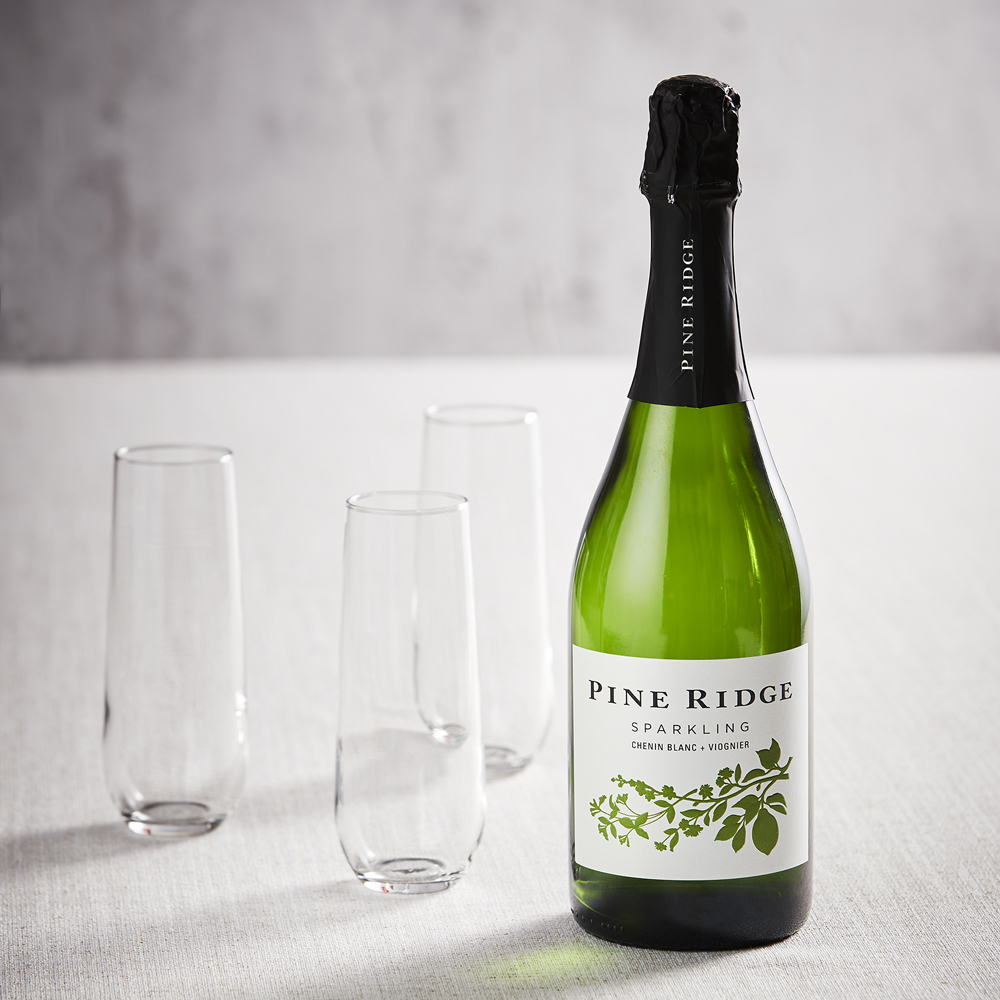
Surprised? Well, Napa and Sonoma are two of my favorite places on earth and I sing the praises of their wines on Wine-Flair.com, elsewhere and whenever I talk about wine. I was just there a couple weeks ago, in fact, visiting Cliff Lede (interesting sparkling wines, and good Sauvignon Blanc); Pine Ridge (underappreciated reds, mainly because their Chenin Blanc/Viognier is one of the best inexpensive white wines on the planet), Robert Sinskey (the Three Amigos Pinot Noir is tremendous), and my good friends at Corley Family Napa Valley, where I like everything. I’m a fan of Washington and Oregon wines, and I appreciate the amazingly great stuff that comes from the Hudson Valley, Finger Lakes and Long Island regions of New York, driving distance NJ.

But the truth is that a lotta American wineries, especially in California, have simply priced themselves out of the market.

For example, I’m reading an article from a wine consumer magazine that describes “an affordable, lush Napa Cabernet” – for $80/bottle. For some folks perhaps that is affordable, but to me it means that the producers haven’t seen a dictionary in quite some time. Nor are they in truly in touch with anyone but the highest of high-end customers.

But, hey, there are still lots of great wines to be had that won’t add to our financial woes. Not much, anyway.  And to be fair, there are a few from Napa!

WHITES

Benzinger Carneros Chardonnay 2005 (Carneros CA) $16

Mt. Nelson Marlborough Sauvignon Blanc 2007 (New Zealand) $16
Pine Ridge Chenin Blanc – Viognier 2007 (Napa) $15

Geyser Peak Sauvignon Blanc 2007 (Sonoma Valley) $15
Martin Codax Albarino 2007 (Spanish Albarino from Rias Baixas) $13-15
Laboure Roi Macon Villages Saint Armand 2006 (Unoaked, France) $13
Chateau Turcaud Entre Deux Mers Blanc 2007 (Sauvignon Blanc, France) $13

Nieto Senetiner Reserva Torrontes 2008 (Torrontes, Argentina) $12
Gravitas Chardonnay 2006 (Unoaked, New Zealand) $11
Gravitas Sauvignon Blanc 2006 (New Zealand) $10

REDS

Erath Pinot Noir 2007 (Oregon) $19
Concha y Toro Puenta Alto Cabernet Sauvignon (Chile) $19

Castellani Chianti Classico Campomaggio (Sangiovese, Italy) $18
Chateau St. Michelle Indian Wells Cabernet Sauvignon (Washington) $18
Villa Mt. Eden Cabernet Sauvignon 2004 (Napa Cab) $15
Castillo de Baron Monastrell 2008 (also called Mourvedra, Spain) $13
Renacer Punto Final Malbec 2007 (Argentina) $13
Pillar Box Padthaway Red 2006 (Shiraz/Cabernet mix, Australia) $13
Las Rocas de San Alejandro Garnacha 2005 (Spanish Grenache) $12
Bodegas Castano Hecula 2005 (Spanish Mourvedre) $12