Posts Tagged ‘Bordeaux’
In pursuit of a Sherry-Lehmann-sponsored tasting of the 2006 and 2007 Bordeaux, I wandered over to the Four Seasons restaurant in Manhattan on Saturday afternoon.
Given that I’ve dedicated myself and this site to wine education and wine appreciation rather than ratings and numbers, I’ll just list my favorite wines from the tasting and fill in more information if get the time.
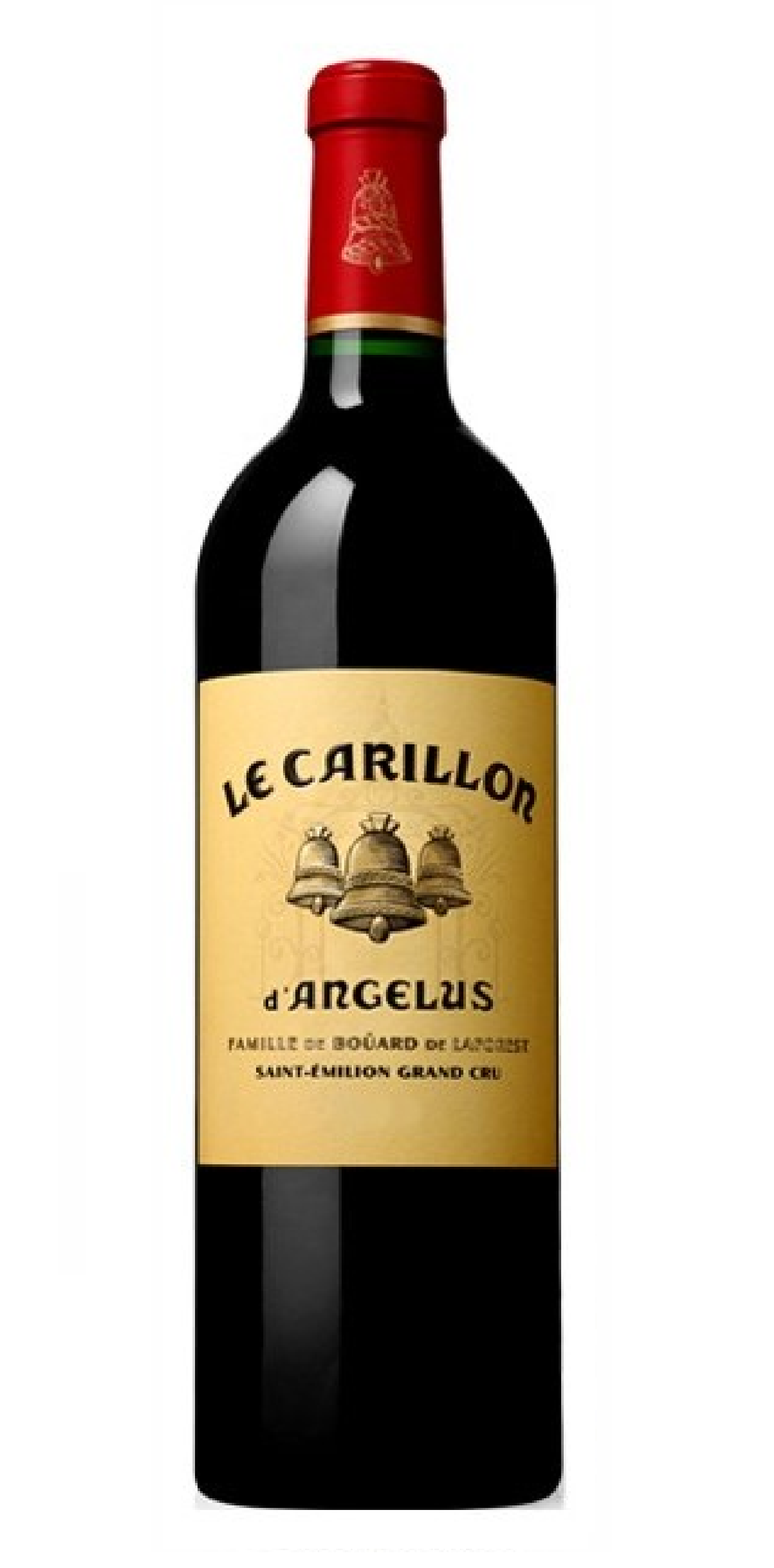
My very favorite is the Chateau Angelus 2007 from St. Emilion. Granted, everything from this estate is very pricey, as it’s a Class B Premier Grand Cru Classe from the rather strange St. Emilion classification system. My second choice is the Chateau Gazin 2006 from Pomerol. I’ve got a case of the 05 resting comfortably in my cellar, and they may get some younger friends soon, I think.
My third choice is the Chateau Kirwan 2006 from Margaux. Here I think the influence of 10-12% Petit Verdot really adds something.
My fourth choice is the Chateau Figeac 2007 from St. Emilion.
Rounding out the top five is Chateau Giscours 2007 from Margaux.
Many though not all of the ‘sixes seem identical to me – and too acidic, too tannic – sometimes roughly so – and generally lacking the fruit I like. But if you look at my top favorites, you’ll also see that three of the top five are so-called right-bank wines, which are heavy on Merlot and much less so, on Cabernet Sauvignon.
The Vintages
It seems that the ’06 vintage is the product of a generally lousy year, climactically speaking. There was lower than average rain from spring until summer when it was most needed, followed by searing heat in July that nearly shut down the vines. August brought cool and rainy days and the threat of rot with them. And then in mind-September, a deluge of rain. These are ideal conditions.
Ideal for a lousy harvest, that is. Yet I still found a few sixes that I like.
Before fall the ’07 wasn’t turning out any better…until September (I was there) when a month of helping winds, sunshine and consistently warm days really pulled this one out, unlike my adopted NT Jets, who were unfortunately unable to last weekend. At the same time, the earlier summer rains produced a lot of noble rot and excellent sweet Sauternes.
Some other Reds from the two vintages that I really like include:
Now I’m sure that a lot of the “big name” wine writers, including some that I greatly respect such as Jancis Robinson, will have a very different view. I didn’t look at their ratings so as not to have any prejudices.
And my point here is what it always is – You do need to train your palate and educate yourself a bit, and then, follow your taste buds.
I built this website to help you de-mystify the world of wine, so that you can try new stuff at your local retailer, or order confidently in a restaurant. And this little article should also give you some gumption when you attend your first, or 20th, wine tasting.
So – you’re invited to a formal wine tasting…and you want to go. After all, it’s for a worthy charity that you know, and the buzz is they’ve got some wonderful cult California reds and brilliant French white Burgundies. Yum. So you register, and pay your $75, and you show up with excitement and anticipation. You’re relatively new to the world of wine, and the only “tastings” you’ve ever attended are at a friend’s house. And we all know that those were really more like wine “drinkings,” also known as “parties.”
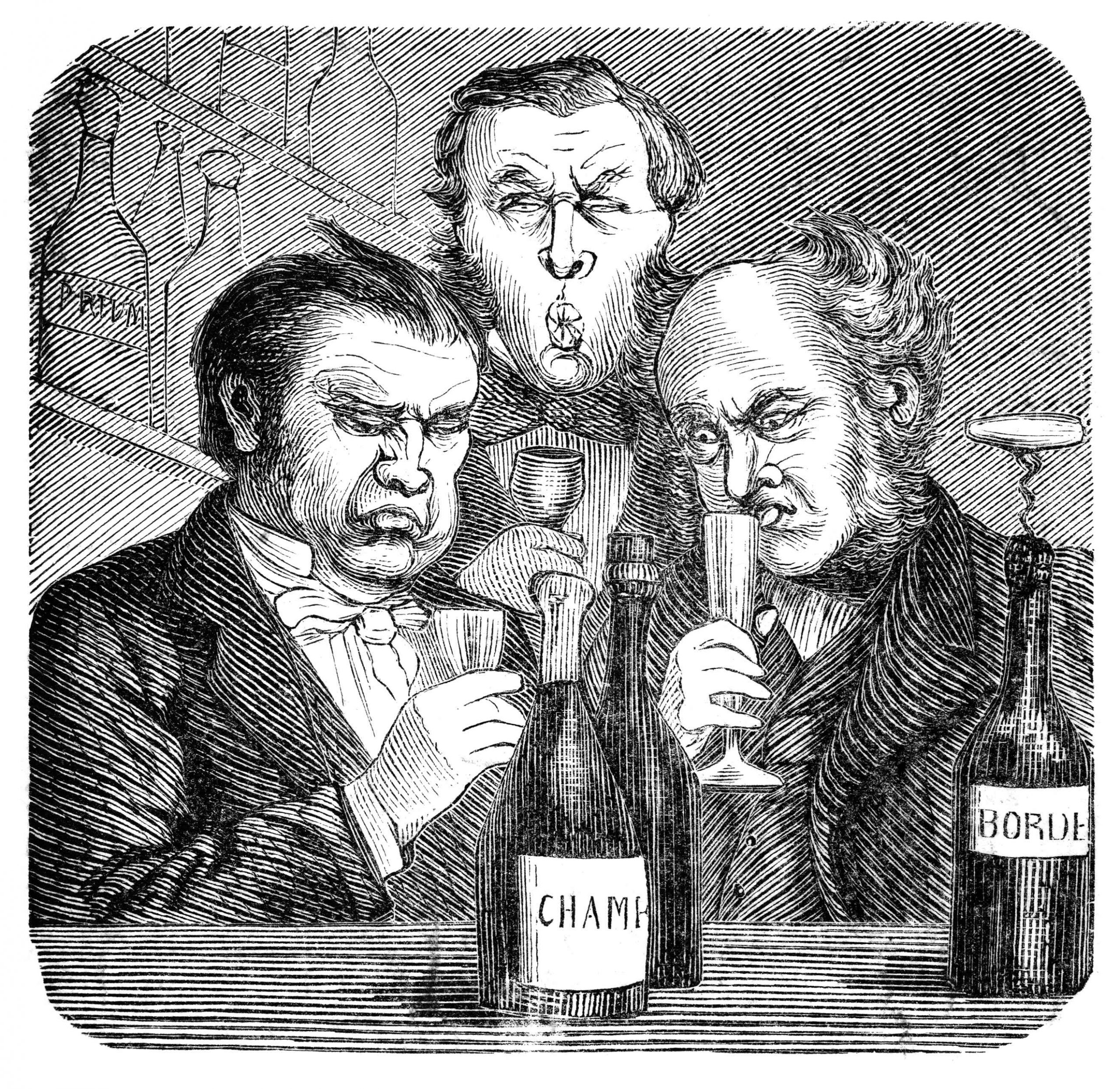
So when you stand outside and gaze into the tasting room, you feel overwhelmed as you watch the light reflect off hundreds of freshly washed glasses, while the assembled guests preen and prance around like masters of the universe. This is supposed to be fun, right? But all you see is very serious-looking people having what look like very serious conversations with well-dressed men and women standing behind tables, carefully pouring a small sample into each glass. The guests hold their glasses up to the light very deliberately, and then swirl them with great ostentation before sticking their noses in so deeply that you think they’ll break – the glasses, their noses, or both. You hear one say something about the “mid-palate” and another remark that “too much time in 100% French is obvious.” Some guests even have those little shiny “tastevins” around their neck, while the prettiest woman in the room is spitting into a ceramic bucket from three feet away with the accuracy of a Marine sniper.
Aside from all these affectations of wine tasting, you think to yourself “I’m not really experienced or very good at this…and what if one of the wine suppliers asks me to describe their product wine in ‘wine terms’ – I will literally shrink to the floor!” You assume that the palates of these critics – and their tastes in wine in general – are so much more “refined” than yours, that you’re simply out of place here.
Well, don’t, and, you’re not.
Why do I say that? ‘Cause in 2001, a professor at the University of Bordeaux conducted two wine tasting experiments that show just how much we are all influenced by pre-conceived perceptions. In the first of his two, well, scams, Professor Frederick Brochet invited a bunch of self-anointed wine experts to describe the flavors and aromas of both red and white wines he poured. One of these high priests lauded the red for its “jamminess,” while another talked of its “crushed red fruit.” None of the almost 60 experienced tasters figured out that the red was really a white wine, tinted darkly with food coloring! The second test with a different group was even sneakier, in which ordinary and inexpensive red table wine was placed in a pricey Grand Cru-labeled bottle, and also in its original labeled bottle.
In other words, a single wine was passed off as itself - and as a different, far superior wine. Yet three-quarters of the experts there judged the “grand cru” as “complex, balanced and rounded,” while the vin de table in their view was “weak, light, flat and faulty”.
But they were the same wine!
My points here are simple:
This morning’s Decanter online has a story about what seems to be the collapse of the high-end Bordeaux wine market, including En Primeur, the method by which certain European producers offer wine for sale while it’s still in the barrel. In other words, you pay for it 12 to 18 months before you can even get your hands on it. You’re paying, of course, for the promise of a great vintage (or the heartbreak of a bad one), the prestigious names on the labels, and the cachet of getting a wine that’s not for sale in any store. En Primeur applies only to certain wines from Bordeaux, Burgundy, the Rhone and Port wines.
In the U.S. and other places, though, there’s something called “allocation” in which the wines are sold only to people who are on a list carefully maintained by the winery. These allocated wines, similarly, are rarely or never sold in stores and in some cases there’s a long (sometimes years or even decades) wait to get on the list. Kinda like NY Giants season tickets…
Well, that used to be the case, anyway (for both the wine and the Giants). But just from December to now, I’ve received calls from three luxury California producers offering me allocated wines that I was only “wait listed” on, and two that I merely visited once. Unheard of! And like lots of you out there, in these times I can’t spend the significant, though very reduced prices, that these wines fetch.
So, to be sure, the gravy train has ground to a halt on its track. But it’s hardly the fault of the Bordelaise (the people who grow and vinify those costly Bordeaux En Primeur wines) or limited to French wines. The wine collector segment everywhere, including the U.S., Australia, and across all of Europe, has been hit hard. And it’s extended to the so-called Luxury, Super-Premium and Premium wines, the higher-priced wines that you can always find in better retail stores but that make you say “how can one bottle of wine, no matter how good, possibly cost so much?”
Well, this painful and unfortunate economy may provide a “market correction” that injects a bit of sanity. Now none of us wants the Budwesier-ization of wine. Bud is fine, mild, pleasant, pretty much never spoiled, rather inexpensive, mostly water and tastes like it. But if wine became more affordable and approachable for more people, the entire industry would benefit and many more consumers could enjoy the pleasures of wine.
I hope the wine world starts to take note – there’s still a huge market out there, but please don’t tell me I “must” have a bottle that costs a month’s salary. No, I musn’t. Nor must you.